Today’s evolving energy systems and regional regulatory frameworks can create uncertainty in the investment decisions for long-lasting power generation assets in a highly volatile business environment.
As technology choices and regulations continue change, investors might fear that such assets could become stranded early in a project’s expected lifetime, well before their investments pay off.
To mitigate this risk, solutions are needed that not only ensure economic viability today but are also adaptable to future energy systems. New assets need to be “future proof”.
H2-ready gas turbines
Gas turbine power plants offer an ideal answer to these challenges. First, today’s natural gas fired gas turbine combined cycle plants offer low investment cost, high efficiency and lowest CO2 emissions with 65% reduction in carbon density compared to coal-fired power stations.
Second, due to their unmatched operating flexibility, gas turbines are an excellent complement the growing wind and solar share on the power grid, whuch fluctuate significantly with the time of day and the weather conditions.
Thus, when wind and sun are not available, gas turbines can ramp-up quickly with their short start up times to cover the residual load.
Considering the long term, gas turbines are also fuel flexible, offering decarbonized power production with the conversion to hydrogen fuel. Further, depending on specific engine and site requirements, most existing gas turbine installations can be retrofitted for hydrogen combustion. Another option is the retrofit of post combustion carbon capture, and the technology choice must be evaluated based on the conditions of the specific power plant.
This fuel flexibility of gas turbines was demonstrated by the EU-supported Hyflexpower project in 2023 (see article in Gas Turbine World, March 2024) where a 15 MW SGT-400 gas turbine at a cogeneration plant in France successfully ran on different natural gas + hydrogen blends – up to 100% hydrogen – under real-world conditions in DLE mode.
Beyond this landmark demonstration of 100% hydrogen operation, Siemens Energy has a clear roadmap for upgrading other gas turbine models in its portfolio to full hydrogen capability. This includes their largest gas turbine, the 593 MW SGT5-9000HL for which the UK-based utility SSE and Siemens Energy have launched “Mission H2 Power” – a collaboration aiming to deliver such gas turbine technology.
Case study: Leipzig Süd CHP plant
An excellent example of a gas turbine power plant that already economically produces electricity and district heating today, and will fit perfectly into the future energy system, is the Leipzig Süd District Heating Plant.
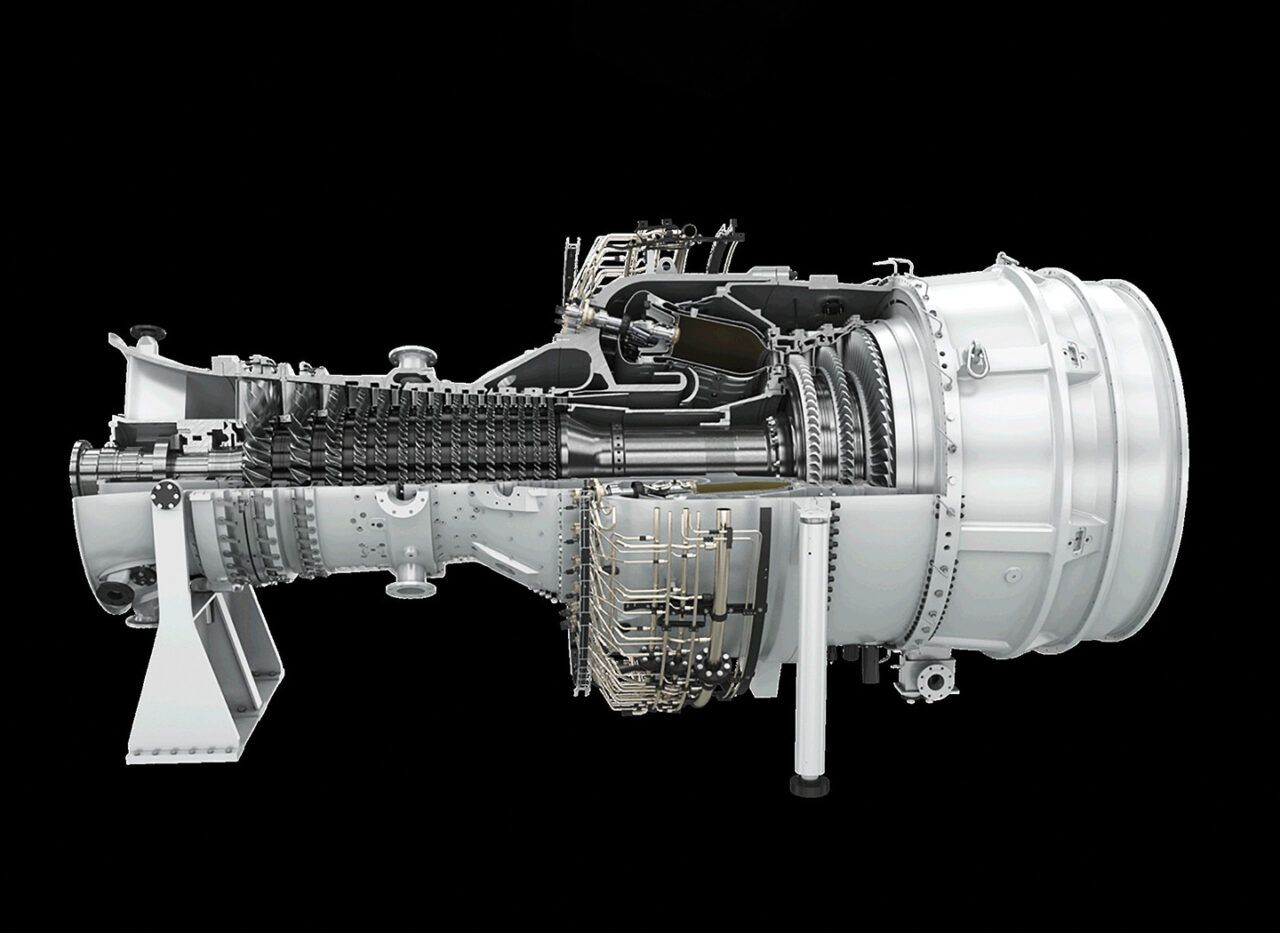
The plant, which was built on the site of a decommissioned coal-fired power plant, went into commercial operation at the end of 2022. It consists of two SGT-800 gas turbines (Figure 1), each with a rated electrical output of 62.5 MW (at ISO conditions).
However, as a cogeneration district heating facility, the plant’s main purpose is to feed the exhaust heat in the form of hot water into the Leipzig’s district heating network while generating additional electricity for the city’s 600,000 residents at a competitive cost.
The total thermal output is 163 MWth, for a total combined (thermal plus power) plant output of 288 MW. The power plant achieves a high fuel utilization rate of up to 93% for electricity and heat.
Heat storage adds flexibility
As heat supply is the top priority of the plant, a purely heat-driven plant operation would severely limit the plant’s flexibility in the local electricity market and make it almost impossible to respond to the fluctuating feed-in of renewable energy.
To avoid this issue and increase the plant’s operating flexibility, the owner and operator, Leipziger Stadtwerke, included a heat storage facility (see Figure 2) with a capacity of up to 1,800 MWth, thus decoupling electricity and heat supply.
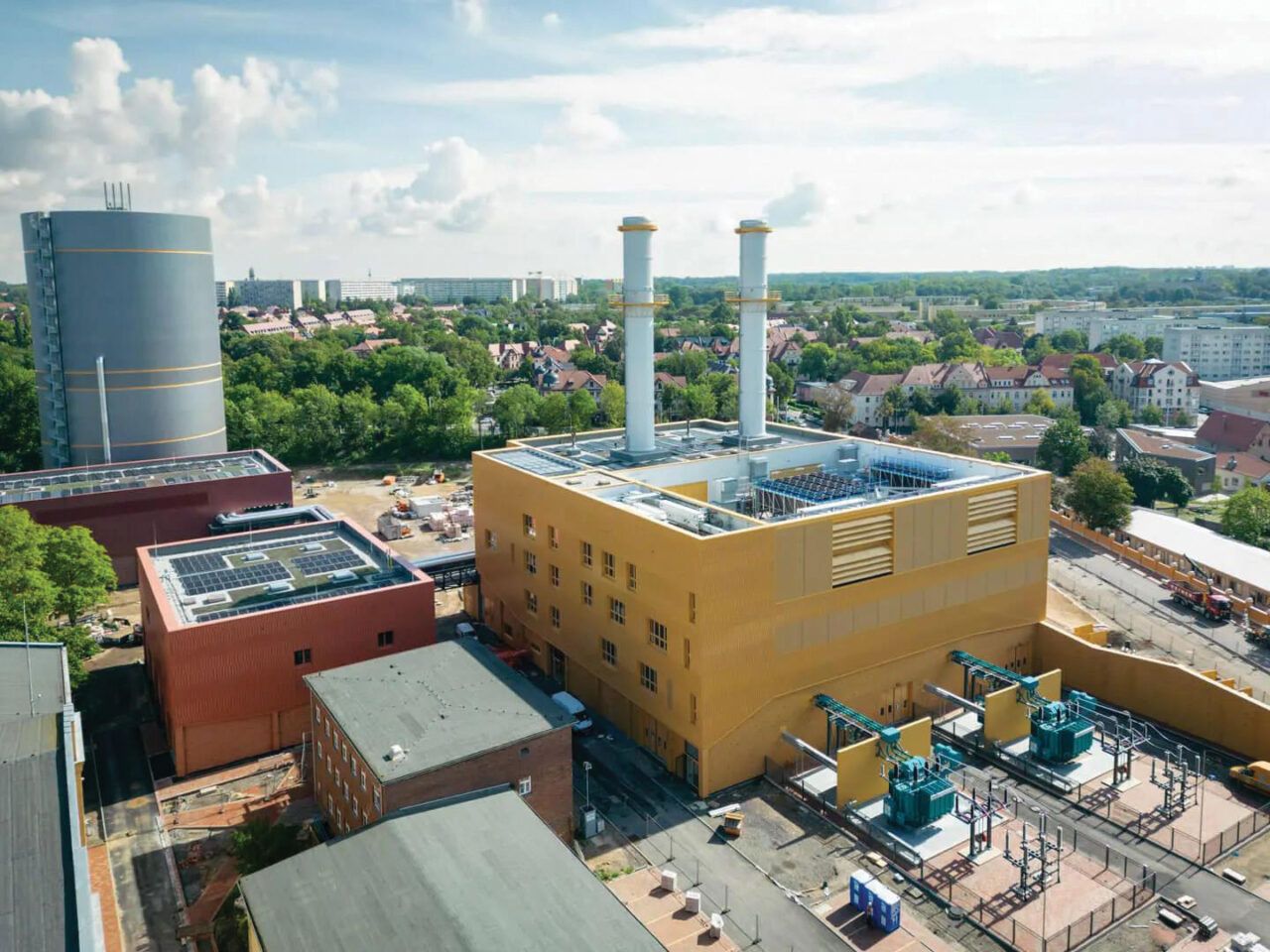
This allows the plant to produce electricity and heat when electricity prices are high, but supply heat from storage when needed. In addition, the power plant can reach full load in just 15 minutes so it can step in as a backup power supply when renewables are producing less electricity than needed to meet grid demand.
Designing an H2-ready power plant
Due to its high fuel efficiency and flexible operation, the Leipzig Süd CHP plant is already economically viable and a commercial success. In addition, as energy systems evolve, its design ensures its owner with long-term adaptability.
And thanks to the foresight of the facility planners and designers, the facility design has been certified as “H2-ready” by TÜV Süd, an independent technical inspection association. Such an “H2-ready” designation defines a power plant as being pre-equipped for a future retrofit to a defined level of hydrogen. This, in turn, optimizes initial investment and later retrofit costs, allowing for a conversion with minimal disruption. (See Siemens Energy article on Hydrogen Readiness in Gas Turbine World, December 2021.)

To enable later operation with 100% hydrogen, the connection of a hydrogen pipeline to the infrastructure of the power plant site is already planned. Space has also been reserved on the power plant site for a gas mixing, pressure reduction and filter section outside of the power plant building. This can produce any mixture of natural gas and hydrogen depending on future requirements.
Since hydrogen, as the smallest of all atoms, can escape particularly easily, special requirements had to be met for all supply gas lines. The fuel distribution system in the power plant is designed for both natural gas and hydrogen, including e.g., the correct material selection and dimensioning of pipes, valves and fitting.
All required systems are already built explosion proof to accommodate the gas group IIC classification for hydrogen operation. Finally, spare space is planned for future hydrogen operation so that, for example, a future inertization system and additional measurement technology for hydrogen can be installed easily.
In addition to the gas supply and auxiliary systems, the gas turbine assemblies themselves are of course crucial to the power plant’s ability to run on hydrogen. While a future change out of a pipe or component may not sound like a major undertaking, civil works, local space limitations and positioning may severely affect the complexity of such a replacement, e.g. when the space between casing and foundation cannot accommodate the larger diameter piping.
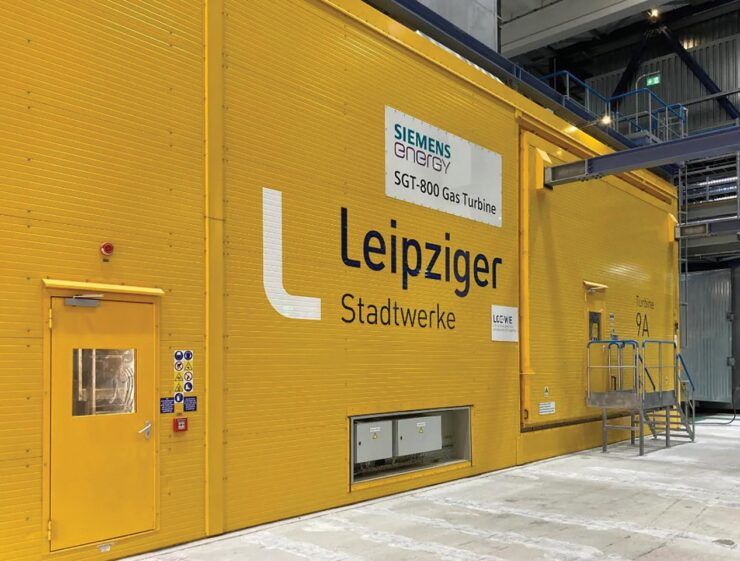
Similarly, the expected change to hydrogen-capable burners may be more complicated if potentially larger equipment is not considered upfront in the design of auxiliaries or the package hood (Figure 3). H2-ready certification gives operators the certainty that an upgrade to pure hydrogen operation is possible later with only minor conversion work on the power plant itself and within limited disruption.
Challenges of hydrogen combustion
Switching from natural gas to hydrogen presents three primary challenges related to the significant differences in properties between the two:
1. Higher reactivity and flashback control: Hydrogen flames show much higher flame speeds than natural gas, posing the risk of flames moving backwards, into the burner, causing hardware damage and requiring quick turbine shutdown.
2. Material impact and system modifications: Hydrogen can cause steel embrittlement, weakening materials and leading to failures. Due to the small molecule size, changes to flanges and seals are also required for leak avoidance.
3. Controlling NOx emissions: Operation with hydrogen increases NOx emissions due to slightly higher combustion temperatures and risk of local hotspots in the combustion chamber. In addition, there is a significant calculation bias of up to 37.2% when measuring NOx emissions in relative concentrations (i.e., ppmv referenced to dry exhaust and 15% O2 content in exhaust), as the different exhaust conditions (particularly the water vapor content) in hydrogen mode overinflate the ppmv number.

Additive manufacturing techniques enable new ways to manufacture the entire burner as a single piece of metal (Figure 4), ensuring structural integrity and an optimized design.
In addition, this manufacturing technique allows complicated internal features such as miniature cooling channels to be integrated into the burners. This enables them to tolerate significantly higher combustion zone temperatures without the risk of damage, or even melting.
It will also facilitate incorporation of design features to improve the injection and mixing of hydrogen into the combustion chamber and thus optimize the combustion process. Finally, additive manufacturing allows for quick burner design changes, which increases the speed of the development process.
Hydrogen deployment plans
The Leipzig Süd plant owner, Leipziger Stadtwerke, plans to upgrade the plant and both SGT-800 gas turbines for 100% hydrogen operation in the coming years. This depends on when the fuel will become available, and when hydrogen operation is considered commercially viable.
In that regard, there are already concrete plans in Germany to construct a national hydrogen pipeline system. In October 2024 the German Federal Network Agency approved the construction of the nationwide hydrogen core network (Figure 5).
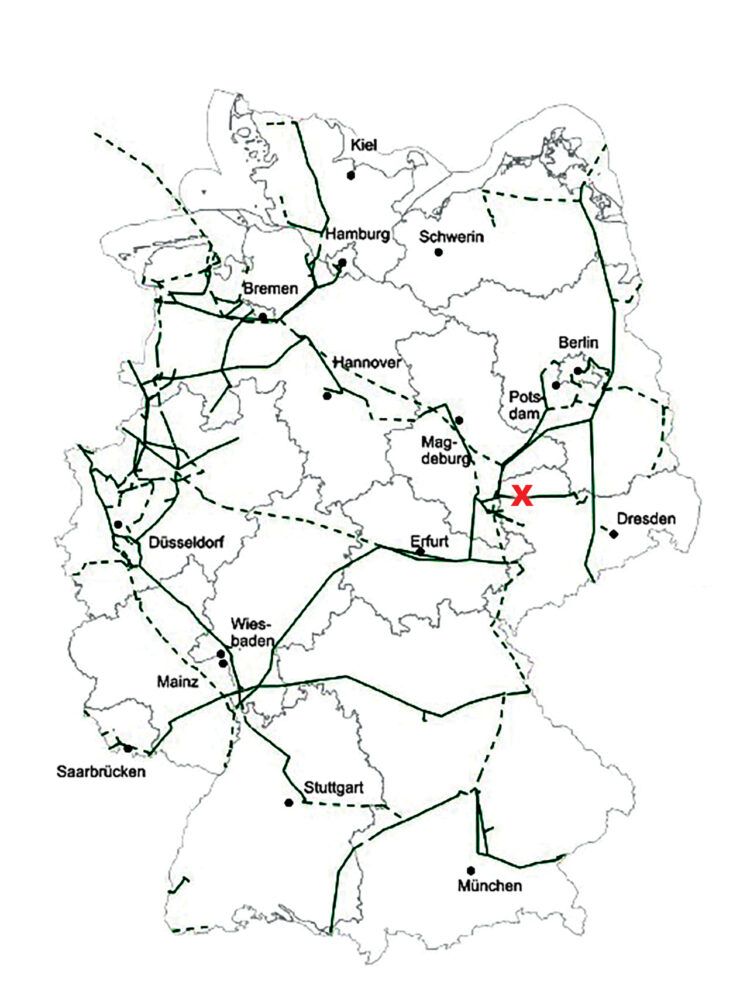
The total length is to be over 9,000 kilometers (approx. 5,600 miles), about 60% of which will be converted natural gas pipelines. The Leipzig Süd CHP plant is scheduled to be connected to this hydrogen network in the next years.
Meeting current and future energy needs
The Leipzig Süd CHP plant exemplifies how a gas turbine-based facility can provide cost-efficient, clean and reliable energy to meet current needs while being readily adaptable to future decarbonized energy systems.
The availability of hydrogen as fuel for such a plant will depend on external factors such as policy frameworks, energy market developments, and technological advancements.
In Germany, first steps are taken with the German Hydrogen Core Network connecting all German power plants with 100 MW or more electrical power rating and with the hydrogen transmission pipeline passing Leipzig is already being filled with hydrogen (updated March, 2025).
Thus, Leipzig Süd demonstrates that a well-designed plant can operate economically and sustainably today while seamlessly integrating into future hydrogen-based energy landscapes. It serves as a blueprint for similar projects worldwide.