The annual PowerGen International conference took place in January 2024 at the Ernest N. Morial Convention Center in New Orleans. The event kicked off with keynotes from industry executives with an overarching theme of decarbonization.
Bradford Crabtree, Assistant Secretary for Fossil Energy and Carbon Management at the Department of Energy (DOE), named carbon capture and storage (CCS) as a priority. This, he said, aligns with the Federal Government’s goal of reducing greenhouse gas (GHG) emissions by 50% by 2030 and achieving net zero emissions across the entire power sector by 2035.
“The DOE estimates that reaching ambitious plans for a net-zero economy will require capturing and storing between 400 million and 1.8 billion metric tons of CO2 emissions from the U.S. economy annually by 2050,” said Crabtree.
Deanna Rodriguez, CEO of Entergy New Orleans, also promoted her company’s efforts to decarbonize while keeping electricity costs at an affordable level. This strategy is being flanked by a reliability program. About two years ago, weather events resulted in the city losing power for a week. Entergy has compiled a resilience plan to ensure that never repeats.
A surprising addition to the PowerGen keynote roster was Todd Noe, Director of Nuclear Technologies Engineering at Microsoft. But the tech giant’s software has garnered a substantial presence in the energy and utility markets. Noe noted ongoing projects in renewable energy, energy storage, nuclear (small modular reactors or SMRs) that forward net-zero decarbonization goals.
These efforts are good news for wind, solar, and battery energy storage systems (BESS). For gas-fired facilities, however, more restrictions lie ahead. While the industry has a good record of reducing emissions over the last quarter of a century, the decarbonization push is likely to lead to yet more plant closures in the U.S.
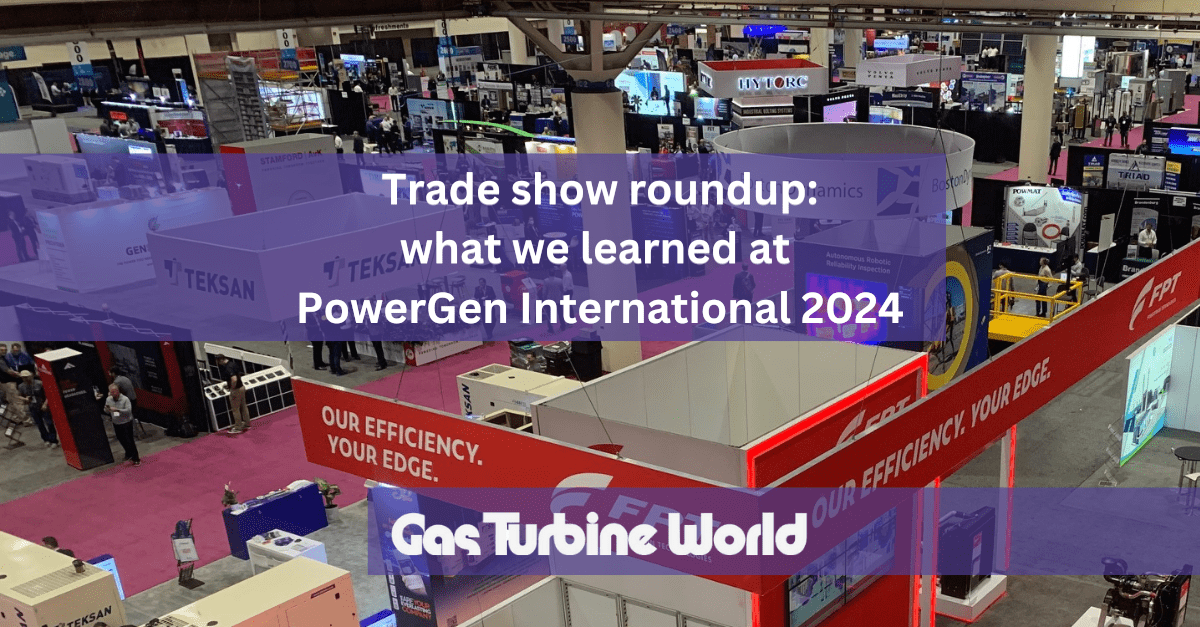
A walk through the PowerGen exhibit hall showed the extent to which the industry has pivoted from gas turbines. A few years ago, the likes of Siemens Energy, Mitsubishi Power, and GE Gas Power would showcase their turbomachinery offerings at massive booths. There wasn’t a turbine or even a model of one in sight at this year’s event. GE Vernova and Mitsubishi Power didn’t have a booth. Siemens Energy sponsored a stage for presentations devoted to hydrogen.
These are challenging times for the traditional power generation market. The good news, though, is that numbers are up for the PowerGen show. This year attendance topped 7,000. That’s up from the 5,000 to 6,000 range for recent events.
For more event coverage, please see the following articles:
Carbon Capture and Storage Interest Ramps Up
Unlocking Hydrogen’s Power Potential
Is Ammonia a Better Alternative Fuel Than Hydrogen?