Importance of air intake systems
The fact that 98% of the input into a gas turbine is air and only 2% fuel is a measure of the importance of proper inlet air filtration and treatment. The amount of air is also very important. At full base load output, for example, today’s large advanced 7HA.03 gas turbine has a mass flow of 1,718 lb/sec –which amounts to 103,080 lb/min (over 51 tons per minute).
Given this amount of air flow, proper functioning of inlet air systems is paramount to reducing air flow pressure drop and filtering out any airborne contaminants to prevent internal damage. Inlet air filtration is at the core of proper air treatment for all gas turbines, regardless of size and age.
In a recent webinar (now available on demand), the experts at Camfil take a look at some of the common issues effecting gas turbine air filtration systems during their operating lifetimes:
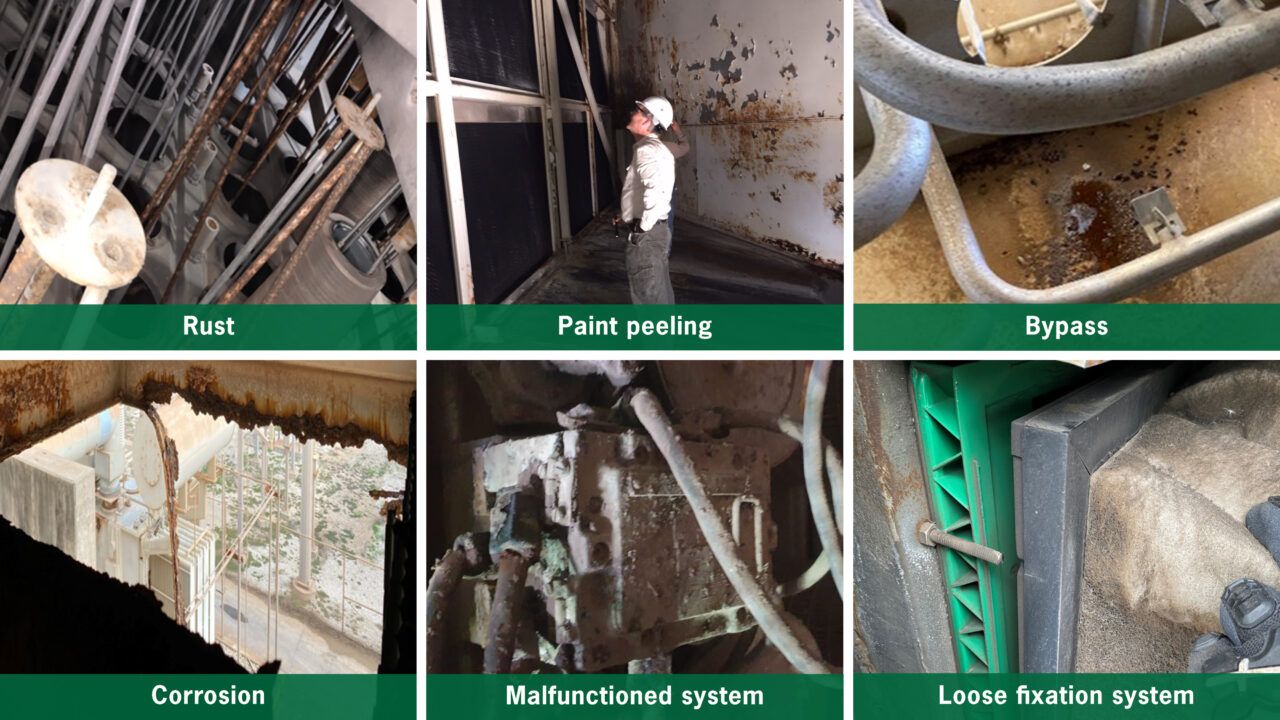
- Erosion, fouling, corrosion. Foreign matter entering the inlet system can impact gas turbine compressors, and large particles can cause major damage. Fouling necessitates more frequent washes, which reduces availability. Corrosion is also widespread, most frequently caused by salt, leading to irreversible damage.
- High and unstable pressure drop. Pressure drops lead to reduced efficiency of unit operation.
These issues cause a loss in power output, decreased availability, and higher fuel consumption, which also leads to higher emissions, increased carbon footprint and, possibly, carbon taxes.
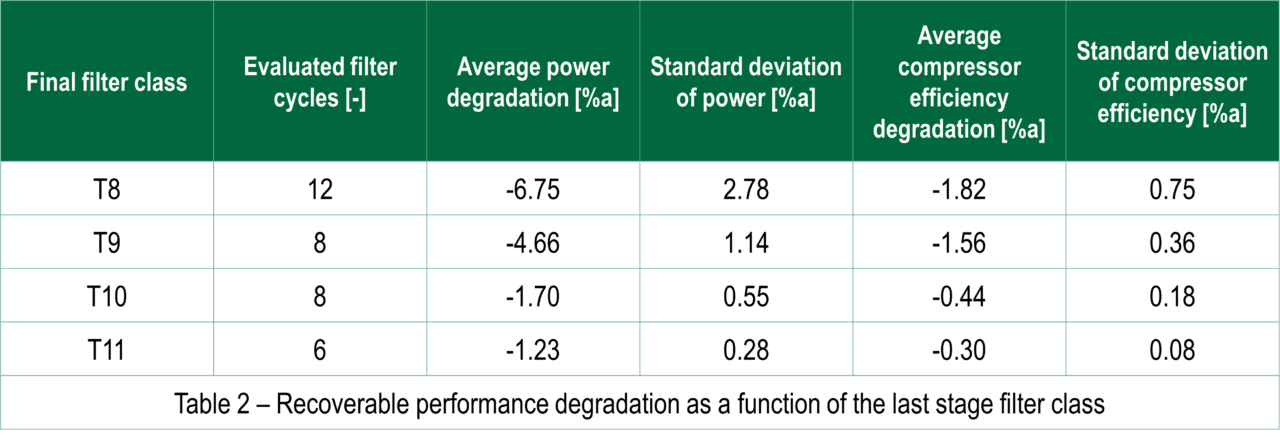
Studies conducted on air filtration systems demonstrate higher-class filters can improve gas turbine performance by over 5%. Poor performance can also be addressed by upgrades to filtration systems.
Plant optimization: methodology to assess your system
There are many reasons why plant operators undertake gas turbine air intake system repairs – ageing systems, working in challenging locations (offshore, for example), or when driven by gas turbine upgrades that require adjustments to intake airflow.
Whether that means full air intake system replacement or minor repairs is in many cases plant-specific, or even unit specific (based on intended use).
The webinar also talks about the company’s proprietary “Life Cycle Cost” analysis program which is a free program operators can use to weigh options between retrofit and repair versus a full system replacement.
Air filter upgrades and repairs can be done with minor retrofits. Major upgrades are usually required to replace housing when different replacement filters cannot be fitted. Major upgrades may also be needed when switching from pulse to static filtration or modifying acoustic silencing enclosures.
Camfil’s Life Cycle Cost analysis of inlet air filtration also reviews client-specific factors, such as:
- Budget, schedule, system age
- Operational requirements (how many hours will unit be running?)
- Life cycle plan for the engine (will it be retired soon?)
- Technical complexity – accessing difficulties, environmental challenges
- Root cause – what needs to be solved?
The webinar looked at different projects around the world where the customer objective was to reduce fouling, avoid corrosion, increase efficiency, and use less fuel. Two of those case studies:
Retrofit example in Gulf of Thailand
The air inlet systems for two (Rolls Royce) gas turbines in the Gulf of Thailand were originally installed with high velocity systems and a single-stage bag filter. The operators were seeing corrosion due to the sea salt and also pressure spikes that led to having to replace the filters every six months.
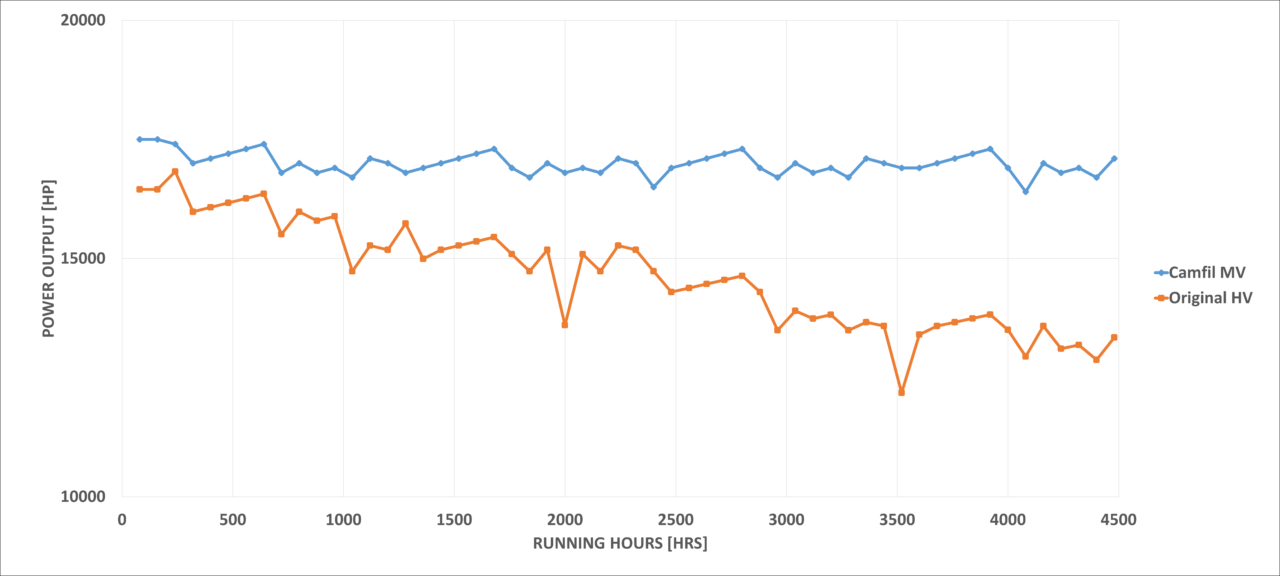
The retrofit changed the filter house to a medium velocity system, adding slightly more filters, but also two-stage filtration with a very high efficiency T12 filters in the final stage.
Having this very high filtration level eliminated corrosion issues. Despite the high filtration class, they also saw a reduction in pressure drop by 50%, and they now have to replace their filters once a year.
As a result of more efficient filtration, the engine gained around a thousand horsepower (or about 6% more power) compared to before the retrofit.
Replacement example in Alta Garda, Italy
Customer objective: reduce filter changes, avoid maintenance downtime.
An LM6000 on a platform in the Gulf of Mexico was seeing performance issues that required changing out pre-filters 3 times per year and final-filters each year.
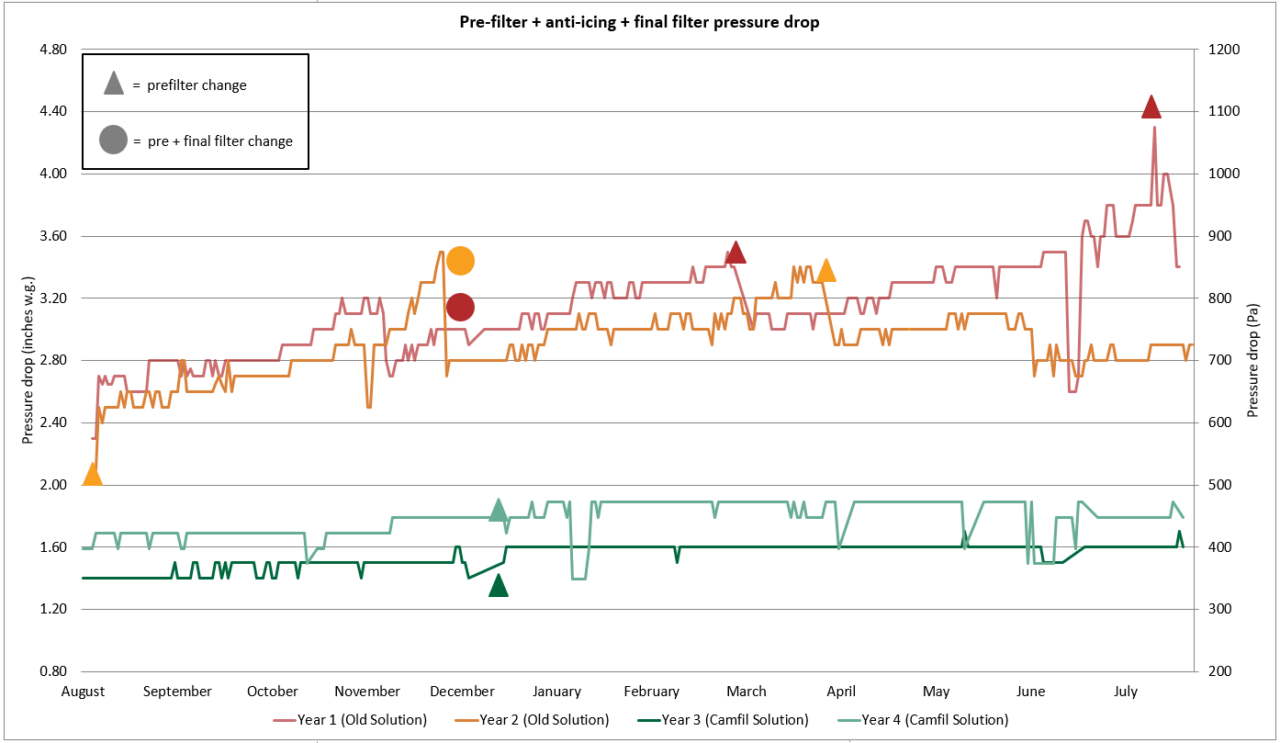
A change to the housing was required for filter upgrades (to T8 and T10 in the final filter stage), which minimized pressure drop, and reduced pre-filter changeouts to only 1x per year and final filter changes every 3 years.
Overall, the customer gained three times more filter life and 50% decrease in pressure drop, which translated to about a 1,300 MW/hour increase in power output for the year.
To learn more, click here.
If you are weighing options whether to upgrade, repair, or replace your air intake systems, Camfil can review system performance and provide a Life Cycle Cost analysis to help you reach the best outcomes. To contact Camfil for details, click here.