Power plant construction is surging due to data center demand.
A study by analyst firm Industrial Info Resources (IIR) highlighted how the rapid expansion of hyperscale data centers is driving a surge in energy demand. In response, utilities, power providers, and grid operators are scrambling to adapt to almost exponential growth being driven largely by AI.
IIR’s Shane Mullins cited $2.4 trillion as new AI data center development in play in the U.S. right now. Over 70 of these projects are greater than 1 GW in size. Although some of these will inevitably fall by the wayside due to lack of power, permitting delays, local opposition, lack of finance, IIR believes most of them will be completed.
U.S. electricity demand was around 23 GW in 2023. It is already up to 42 GW and IIR predicts it could exceed 90 GW by 2030 (some believe this is an underestimate; time will tell). This market boom is being propelled by what some consider unrealistic timeline demands from hyperscalers like Google, Microsoft, Meta, and Amazon. They want new power facilities up and running in a year or two, not the usual five to ten years into the future that has become the norm.
According to IIR, North America accounts for two thirds of worldwide dollar value of announced projects. Europe is in second place. Latin America is in third position. Its proximity to North America has led to high investment.
Mega-hubs are under development in Queretaro, Mexico, Sao Paulo, Brazil. Notable AI data center projects include Stargate Argentina (OpenAI and Sur Energy), Omnia Data Center in Brazil (TikTok), and the X8 Cloud Complex in Paraguay.
Behind Latin America come various parts of Asia. How about China? It has attracted about a fifth of U.S AI data center investment, but exact numbers are scarce. The big winner within the U.S. is Texas with $517 billion in announced project value.
Virgina, for a long time the leader in the U.S. data center market, remains strong at $344 billion. Other states are getting in on the act: Georgia has gained $217 billion in investment, Missouri $121 billion, and Arizona $102 billion. Pennsylvania, Illinois, and Ohio have all attracted between $60 billion and $90 billion in proposed data center funding.
What boggles the mind about all this is that 296 GW in data center growth is planned for the U.S. alone. Amazon data centers comprise 22 GW of this while Google has 10.6 GW, Microsoft has 10 GW, and Meta as 8 GW. But there are plenty of other developers involved. The AI race is on.
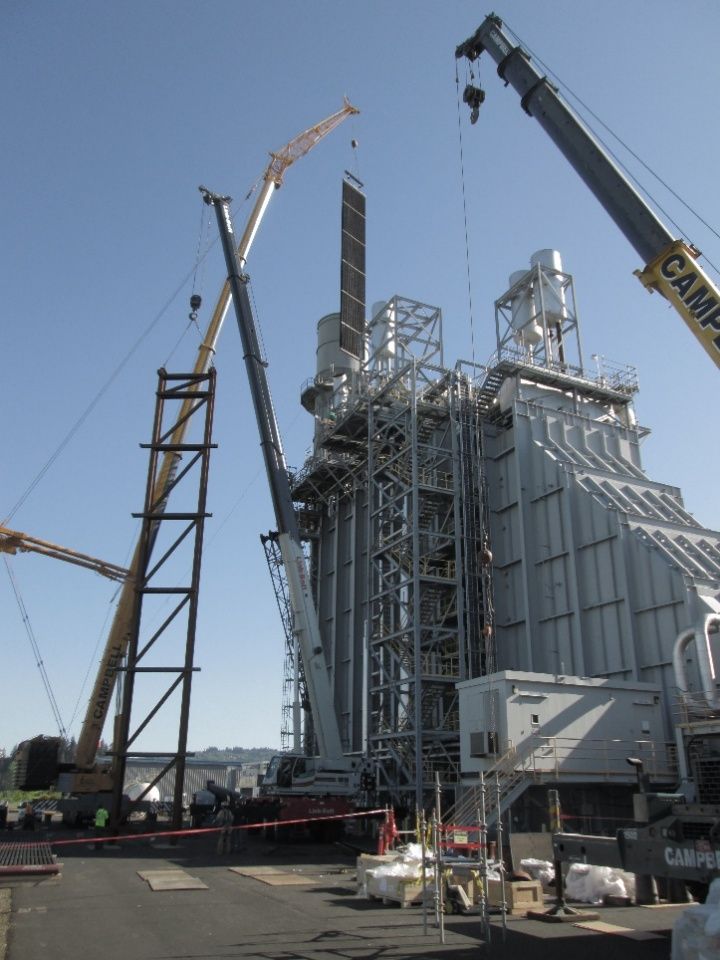
Fortunately, large gas turbines are being favored because of their capacity and relative speed to power. But developers are clamoring for any forms of potential generation for their new projects. As they have largely filled the delivery schedule for gas turbines through the end of the decade already, they are also turning to gas engines, nuclear, batteries, hydro, renewables, and other sources.
With power in such short supply, they are getting creative about how and where the power comes from. Some are buying or converting bitcoin server farms which already have power and transferring them to AI applications.
They are finding old sites such as coal plants and large industrial areas which are already well supplied with electrical infrastructure and building data centers there to simplify interconnection to the grid. One developer even asked about buying old aircraft carriers that have nuclear generators.
Renewable energy has suffered somewhat during this boom because of its lack of availability. Developers want always-on power. However, solar farms have come up with a solution gaining favor: Pairing up a solar facility with battery energy storage systems (BESS). During the day, the solar farm can run the data center. At night, batteries take up the slack.
Is the pace of data center development slowing in 2026? Not a bit. IIR numbers showed that there have been more than $100 billion of announced data center projects worldwide each month for the past year.
In October of 2025, the number exceeded $350 billion. That adds up to $3.2 trillion in ongoing or planned data center investment globally. And the big numbers in announced new projects continue.
“The consistent month-over-month increase in project announcements shows that the pace of AI data center development is still accelerating,” said Shane Mullins, Vice President of Product Development at IIR. “It indicates a structural, multi-year theme of digital infrastructure buildout that is set to continue for the foreseeable future.”