Onsite power is becoming an increasingly popular option for developers.
Securing enough power from the grid has never been so challenging. Utilities and power producers are overwhelmed by interconnection requests.
The volume of power being demanded dwarfs current grid capability and any projections for grid expansion over the next five years. Interest in onsite generation is at an all-time high.
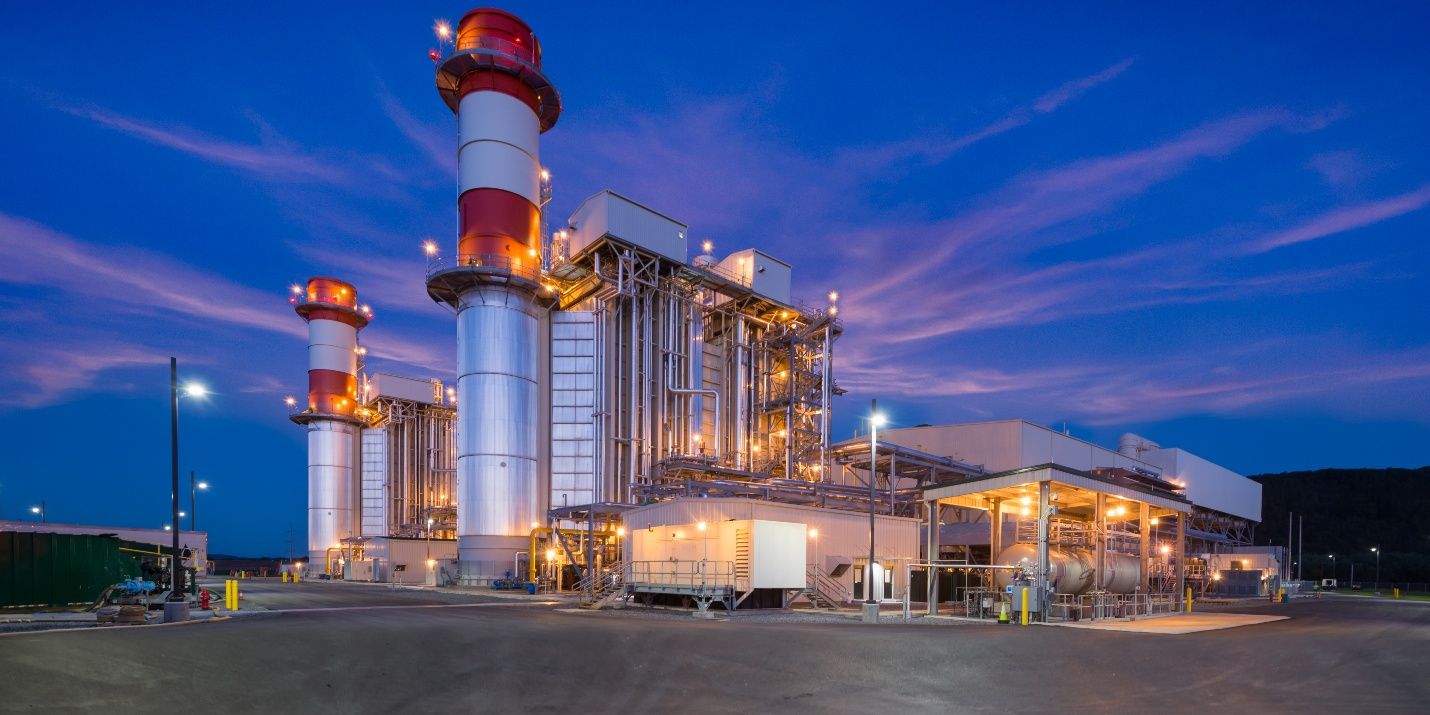
Many data center developers and hyperscalers such as Amazon, Microsoft, Google, and Facebook are turning to simple-cycle natural gas turbine plants due to their speed to market and lower upfront costs.
According to Jennifer Cahill, Associate Vice President, Campus Infrastructure Integration Lead at Black & Veatch, 19% of data centers have implemented onsite power. Another 62% of data centers under development are exploring this form of generation.
“Securing sufficient power from the grid has become a growing challenge, driving interest in onsite generation,” said Cahill, who works with data centers, co-location providers, and developers on infrastructure construction. “A data center can be up and running in 18 months while a new power plant typically takes three to five 5 years.”
Data center developers have little confidence in existing projections and power load forecasts of AI demand. Only 19% thought it was correct. They want to see better tools and faster processes to deal with unprecedented demand for infrastructure creation at warp speed, according to a Black & Veatch survey.
Further, 47% asked about nuclear energy and small modular reactors (SMRs). As for how shifts in energy and climate policy at the federal level, 34% expect no impact. 47% insist they will stick to current strategies even if regulations ease.
What they are most concerned about is lack of power. 53% of utilities cite limited power as the top obstacle to getting data centers online. But transmission (47%) and substation upgrades (46%) are major barriers, too.
What is emerging is a shift in the argument of renewables over gas, or gas over coal. Instead, all forms of generation are needed now. For the time being at least, the fight over how the world should be powered has been superseded by the need to use any forms of energy to provide power to data centers and population expansion.
“You have to figure out what you can do right now to bring power to a new data center,” said Cahill. “Bridging options can be implemented until grid power becomes available or enough onsite power can be added.”
She advised first finding plants that might have excess capacity. The bottleneck data center developers are facing could be eased by taking those facilities to places where there is power readily available.
Another winning strategy is to locate data centers near gas fields and gas pipelines and find any gas turbines or gas engines that may be available.
“As well as siting and gas turbine availability, there are other challenges to overcome in opting for gas-fired generation including gas supply, air permitting, and approval processes,” said Cahill.
Another barrier to data centers and related power plants is a social license, i.e., being accepted by the community. Developers are spending more time and resources than ever engaging with the local population and government officials to gain acceptance for their plans.
To cope with the power profile of AI data centers, gas turbine plants must be supplemented with flywheels, batteries, synchronous condensers, and other power electronics. Cahill noted that data centers running AI suffer from load spikes that suddenly shift from 15% to 85%. These shifts can take place in tiny fractions of a second.
Another issue with pairing large combined cycle plants with AI data centers is the length of traditional outage windows. Taking the plant offline for several weeks isn’t possible for an AI data center. Aeroderivative gas turbines might be a better option for such facilities as they can be swapped out in a couple of days.
Cahill complained about the potential for rising gas prices. In support of this, she referenced gas prices over the past 30 years. While the average is relatively low, there are periods when it spiked sharply.
Thus, she questioned gas reliance as a long-term strategy. Fuel price risk might become even sharper as LNG exports continue to rise. To mitigate risk, she suggested several alternatives. A solar and gas hybridization, for example, has solar carrying the load during the day and gas providing power at night.
Another option is to design simple cycle plants for future conversion to combined cycle. Build simple cycle for the most immediate power but incorporate features that make it easy to upgrade to a more efficient combined cycle plant when more power is needed or additional turbines are available.
Cogeneration possibilities should also be examined. Industrial customers might want steam, for example. Cost sharing might be possible in a cogeneration arrangement.“It is best to have a cookie cutter design for adding more simple cycle turbines or expanding to combined cycle,” said Cahill.
As for nuclear, she named the Westinghouse AP1000 as the only proven nuclear reactor right now. SMRs, on the other hand, must still show feasibility in the real world. “An AP1000 may be a good technical solution but it is not the easiest,” said Cahill.